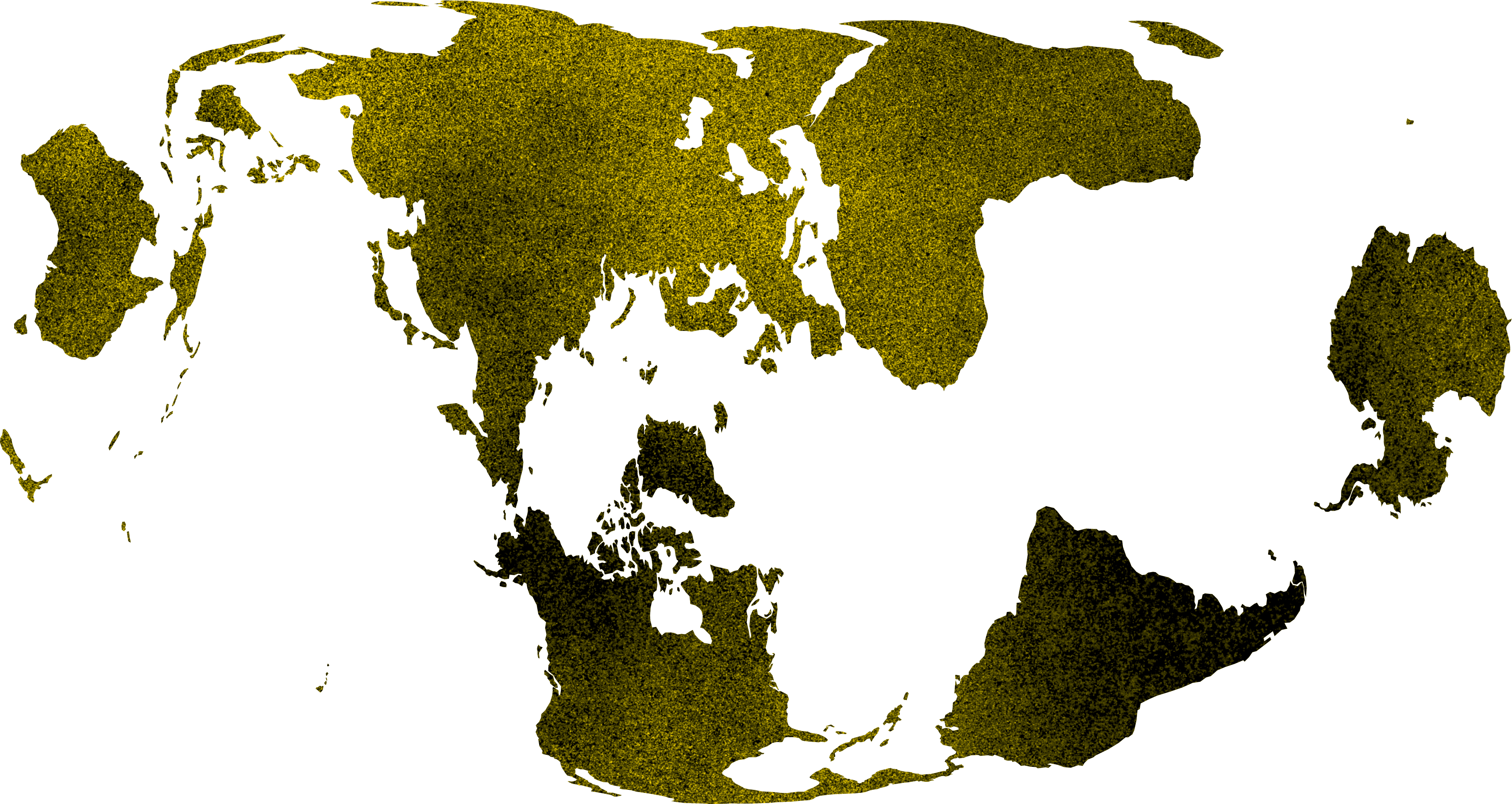
Atlas of Reproduction
Babies, Borders, Geopolitics
Who is allowed to have children – and under what conditions?
Who is supported in having children, and who is prevented from doing so?
What do borders and geopolitics have to do with the most intimate decisions of our lives?
4 September 2026 – 25 October 2026
Kornhausforum Bern
Reproductive rights are human rights that guarantee everyone the freedom to make decisions – autonomously and without discrimination – about their body, their sexuality, and whether, when and how many children they wish to have. Around the world, reproductive freedoms – including the right to abortion – are increasingly restricted, and public debate on these issues is often sharply polarised. The exhibition and book project «Atlas of Reproduction» responds with a research-based space for dialogue.
The project builds on a series of research projects conducted over recent years at the Department of Geography and the Institute of Social Anthropology at the University of Bern. Research projects explore reproductive inequalities, the global entanglements of family planning, reproductive technologies, health, and mobility. The exhibition and book were developed through the mLAB in collaboration with the Institute of Design Research at Bern University of the Arts. The exhibition takes place at Kornhausforum Bern; the finissage at Polit-Forum Bern; and the film evening at Kino Rex Bern.
Exhibition
The exhibition «Atlas of Reproduction – Babies, Borders, Geopolitics» maps the connections between geopolitics and the intimate decisions made in bedrooms, delivery rooms and clinics. Through artistic works based on academic research projects, the exhibition addresses reproductive justice in Switzerland and in different parts of the world.
The eight installations explore diverse reproductive experiences and inequalities. For example through photography, installations explore the motivations of Spanish egg donors and Russian surrogate mothers; a film installation shows how refugee women experience pregnancy in Swiss asylum centres; a three-part video installation connects the experiences of birth mothers from Sri Lanka with the perspectives of adoptees in Switzerland and a researcher.
A dialogical programme of themed tours, workshops, a Living Library, a role-playing game, a lecture performance, a book launch and a film evening deepens the themes. The school programme, led by cultural mediator Manuela Luterbacher, speaks especially to young people.
The exhibition was curated by Mirko Winkel from the mLAB at the Department of Geography, University of Bern. Scientific direction for the book and exhibition project lies with Carolin Schurr and Laura Perler. Design and scenography were developed by Jimmy Schmid and Nicolo Bernasconi at the Institute of Design Research, Bern University of the Arts.
The exhibition is based on research by Nicole Bourbonnais, Surangika Jayarathne, Nora Komposch, Yolinliztli Pérez-Hernández, Laura Perler, Carolin Schurr, Milena Wegelin, Susanne Schultz, Veronika Siegl, and presents artistic installations by Joachim Clematide, Ewa Einhorn, Anat Eisenberg, Lisa Gehrig, Sarah Hildebrand, Ashish Kulshreshtha, Xictlixocittl Pérez-Hernández, Lucy Sabin, Tamara Sánchez-Pérez, Sven Rufer, Kasia Strek, Armando Zacarías. Amanda Schmid-Scott was responsible for English copy-editing of the exhibition. Lukas Batschelet, Amina Cisse and Michelle Hufschmid-Lin supported the project team in various areas.
The exhibition was made possible by funding from the Swiss National Science Foundation, the University of Bern, the Johanna Dürmüller-Bol Foundation, Pro Helvetia, the Rosa Luxemburg Foundation, the Society in Science – Branco Weiss Fellowship, and others.
Accessibility
The building is wheelchair accessible; a toilet is available on request.
Some events are accessible to people with visual impairments (video / audio available).
Some events are accessible to Deaf and hard-of-hearing people (text-based objects without audio).
Unfortunately, input events are not accompanied by sign-language interpreters.
Programme
October 2026
Thu 1/1014:30Tour and dialogueMessy Decisions. (In)Voluntary Sterilisation in Contexts of Precarity
When is a decision about sterilisation shaped by coercion? When can it be considered autonomous? And can the two even be distinguished for people living under precarious conditions? Drawing on Mexican sterilisation campaigns from 1960 to the present and proletarian sterilisation policy in early 20th-century Germany, this discussion explores how reproductive decisions can be shaped by both individual agency and broader structures of power.
Participants
- Yolinliztli Pérez-Hernández
- Kena Stüwe
- Laura Perler
Thu 1/1016:00Book presentationGlobal Population Politics and Reproductive Lives
How have global population policies shaped the lives of marginalised people, and what continues to resonate today? This evening's discussion explores this question on the basis of the presented books «The Gospel of Family Planning: An Intimate Global History» (Bourbonnais 2025, The University of Chicago Press) and «Reproductive Racism: Migration, Birth Control and the Specter of Population» (Schultz 2023, Anthem Press), as well as the work «From Troubled Pasts to Occluded Futures: A Clinic-Based Ethnography of Female Sterilisation in Northwest India» (Sahay 2026, Graduate Institute Geneva). The focus is on groups in the Global South and North whose reproductive decisions were shaped by political intervention. An apéro will be served afterwards.
Participants
- Nicole Bourbonnais
- Susanne Schultz
- Arushi Sahay
- Carolin Schurr
- Maria Moctezuma
Tue 6/1015:00Tour and dialogueVoices on transnational adoption
After a tour of the exhibition, Surangika Jayarathne reports on her research in Sri Lanka, including her encounters with birth mothers who gave their children up for adoption. Social anthropologist Andrea Abraham, head of the Institute Childhood, Youth and Family at BFH Bern, then speaks with two adopted people from Lebanon and South Korea about their personal experiences and insights. An evening that brings different perspectives on adoption together and creates space for encounter.
Participants
- Surangika Jayarathne
- Dida Guigan
- Kim Jaehyong Starzacher
- Andrea Abraham
Fri 16/1015:00Tour and dialogueReproductive health in asylum structures
In collaboration with the REFPER project (BFH) and Brava NGO, we invite you to a tour of the exhibition. The subsequent discussion focuses on the lived realities of refugee women and their access to reproductive healthcare. At the centre is the question of what hurdles arise when reproductive justice meets the harsh structures of the asylum system. Tahmina Tagjeva and Fatma Leblebici then moderate a conversation with visitors.
If you need whisper translation, please contact info@atlas-der-reproduktion.ch by 10 October 2026.
Participants
- Tahmina Tagjeva
- Fatma Leblebici
- Milena Wegelin
Fri 23/1015:30Finissage / panel discussionFinissage – Who bears responsibility? Reproductive justice in the asylum system
Is reproductive justice compatible with existing asylum systems? At Politforum, representatives from politics, activism, and public authorities come together to explore this urgent question. Bringing diverse perspectives and responsibilities into dialogue, the panel examines what changes are needed—and who must act—to ensure that reproductive rights do not depend on a person's residence status.
Beginning at Kornhausforum with a joint tour of the exhibition; from 18:30 panel discussion at Politforum in the Käfigturm.
Sun 25/10AfternoonFilmReproductive justice
As part of the Global Science Film Festival, a variety of cinematic forms offer personal and multi-layered perspectives on parenthood, adoption and abortion.
Book

Seven stories provide insights into reproductive lifeworlds across different parts of the world. They tell of Spanish egg donors and Russian surrogate mothers in the global fertility market; of refugee women experiencing pregnancy in Swiss asylum centres; or of women from Poland who must travel to Germany for an abortion; among other stories.
Each story is based on ethnographic research and asks who receives support to make their own reproductive decisions – and under what conditions. The book reveals transnational connections and questions the role of national, technical and moral borders. It makes global injustices visible and calls for reproductive justice.
The book was edited by Laura Perler, Carolin Schurr and Mirko Winkel. It consists of an introduction and seven chapters, each accompanied by professional documentary photographs and a map locating and contextualising the case studies. Author Regina Dürig accompanied the writing process and provided literary editing. The chapters were written by feminist geographers and anthropologists Surangika Jayarathne, Nora Komposch, Yolinliztli Pérez-Hernández, Laura Perler, Carolin Schurr, Milena Wegelin and Veronika Siegl. The texts are accompanied by photographs by Sarah Hildebrand, Ashish Kulshreshtha, Sven Rufer, Lucy Sabin, Tamara Sánchez-Pérez, Kasia Strek and Armando Zacarías. The maps were created in collaboration with Jimmy Schmid and Nicolo Bernasconi at Bern University of the Arts. English copy-editing was provided by Amanda Schmid-Scott.
The book will be available in bookshops from September. After the exhibition closes, it will also be published as a digital open-access edition in German and English. Links to follow.
About
The «Atlas of Reproduction» draws on research projects developed over the past ten years within or in cooperation with the Social and Cultural Geography research group and the mLAB at the Department of Geography, University of Bern. In the book and exhibition project, the Atlas brings these works together to foreground reproductive justice as a transnational issue and open it up for discussion within the Swiss context.
Artistic direction of the book and exhibition project lies with Mirko Winkel (mLAB); scientific co-direction with Laura Perler and Carolin Schurr. Since 2019, all three have worked together to develop new forms of collaboration and science communication at the intersection of art, media and research.